Kinolime
  • Competitions
  • Sign in
Kinolime
  • Competitions
    • Submit a Screenplay
    • Competition Rules
    • Competition Hub
    • Production Hub
  • Media
    • Podcast Hub
    • News Hub
  • Learn
    • Screenplay Coverage
    • Screenwriting Guides
    • Courses
    • How it works
    • Explore the Filmmaking Process
  • Community
    • NXT World
    • Kino Lounge
    • Blog
    • Library
  • About
    • Careers
    • About
    • Contact us
    • Press
  • Help Center

Competition

Home pageCompetition HubHow It WorksSubmission Release

Company

About KinolimePressCareersBlogContact us

Site Info

Privacy PolicyTerms of ServiceTerms & ConditionsCode of ConductAccessibility Statement

Resources

How to read a Screenplay?What is Screenplay Coverage?Podcast HubLearnSupport Centerwww.kinolime.in
Kinolime
Follow us on social:
©2026 Kinolime Inc

7 PM

A grieving daughter can't explain why her 
late father's TV turns on every evening at 7 pm. 
Going back to find out means finally saying everything she never said to him - and to herself.
Genre: Drama
Shooting Location: International
Ask the Writer
Share it
Screenplay Synopsis:
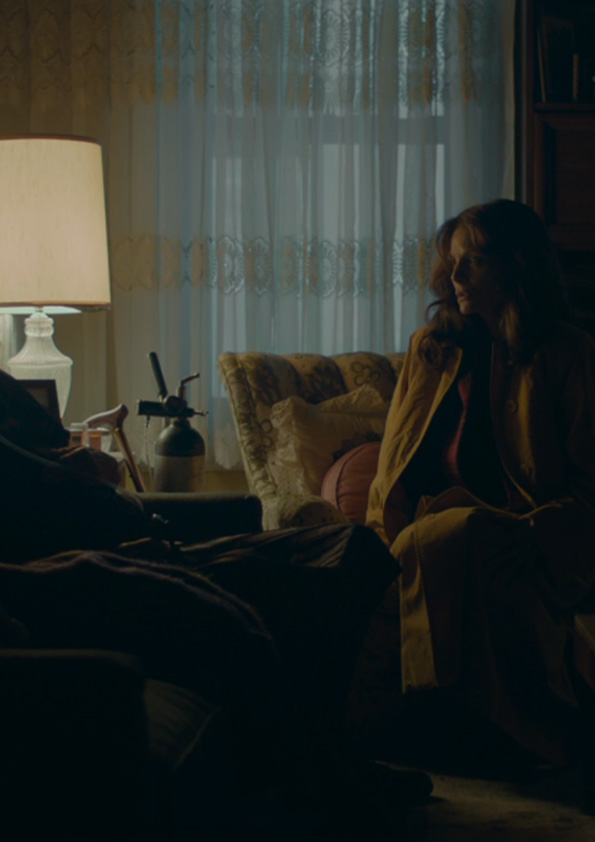
Claire lives her life at full throttle, juggling her job as a fast-food manager, a rebellious teenage daughter, and a widowed father who requires constant attention. Having lost her mother in childbirth, she's mastered the art of burying painful emotions beneath constant action, tackling every challenge with ruthless efficiency and leaving little room for emotional connections or self-reflection. Shortly before her elderly father dies, a cable technician sets his TV to turn on automatically every evening at 7 PM - the exact time he never missed watching the news. After his death, the TV keeps turning on, right on schedule. Claire has no idea why. Despite her initial attempts to rationalize the situation, Claire finds herself drawn back to her father's apartment night after night. For someone who has spent her entire life fixing problems and moving forward, this "supernatural" occurrence forces her to finally stand still. Through one-sided conversations with the empty spot on his couch, she confronts years of unspoken grief and begins to understand the challenges her father faced - a man who had to raise a newborn daughter alone while grieving his wife's death. Slowly, she starts to face her deepest fear: that her very existence caused her mother's death. As Claire gradually lets her emotional walls down, she recognizes patterns of her own parenting in her father's past behavior, leading her to reassess her relationship with her teenage daughter. Over a string of evenings, she dances with him, laughs at his old records, and finally says what she never could while he was alive. When she's ready, she unplugs the TV herself and leaves the apartment for good.

Sharing is caring

Want to see this screenplay get made into a movie? Share the screenplay to friends and get it voted all the way to the big screen

https://www.kinolime.com/screenplays/7-pm

Share:

Related Screenplays

Director's statement:

We've gotten really good at outrunning grief. We keep moving, we solve problems, we check boxes, even when the problem is loss itself. 7 PM is about a woman who has spent her whole life doing exactly that, and what happens when she's finally forced to sit still. Claire manages a fast-food restaurant, raises a teenage daughter, and looks after an aging father - all while burying the guilt she's carried since childhood, that her birth cost her mother's life. When her father dies, his TV starts turning on every evening at 7 pm, the exact time he watched the news for fifty years. The audience knows why: a cable technician programmed a timer earlier in the film. Claire doesn't. That gap between what we know and what she believes is the engine of the film. It lets the audience watch her project meaning onto a coincidence, and in doing so, finally say the things she never said to him. Visually, the film tracks Claire's state of mind. It opens handheld and hyperreal, mirroring a woman in constant motion. As she stops running and starts sitting with her grief, the camera settles too - smoother movement, measured dolly shots, warmer light. There's humor here too: a meddling neighbor, an awkward priest attempting an exorcism that isn't one. But the film's center is quiet: a daughter talking to an empty couch, working her way toward words left unsaid. I lost my father suddenly, and writing this story has been part of how I've worked through the wish to say the things I didn't get to say in time. Before committing to 7 PM as my directorial debut, I tested the same theme in a smaller short film - a way of making sure the idea could carry real weight before building a full production around it. It did. That's what convinced me this was the story to direct first.


Kino Lounge

Only readers can post comments. See our community guidelines.
Be the first to ask a question.