Director's statement:
We've gotten really good at outrunning grief. We keep moving, we solve problems, we check boxes, even when the problem is loss itself. 7 PM is about a woman who has spent her whole life doing exactly that, and what happens when she's finally forced to sit still.
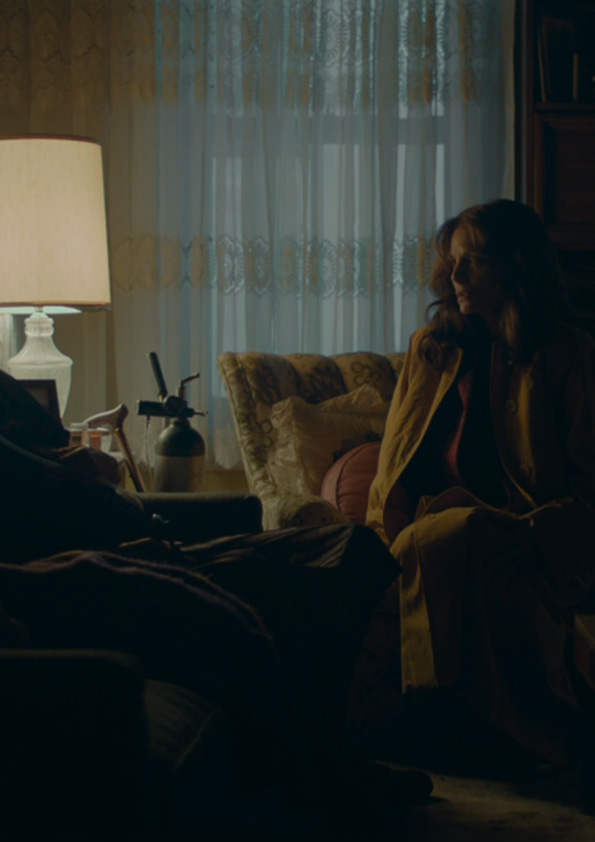
Claire manages a fast-food restaurant, raises a teenage daughter, and looks after an aging father - all while burying the guilt she's carried since childhood, that her birth cost her mother's life. When her father dies, his TV starts turning on every evening at 7 pm, the exact time he watched the news for fifty years. The audience knows why: a cable technician programmed a timer earlier in the film. Claire doesn't. That gap between what we know and what she believes is the engine of the film. It lets the audience watch her project meaning onto a coincidence, and in doing so, finally say the things she never said to him.
Visually, the film tracks Claire's state of mind. It opens handheld and hyperreal, mirroring a woman in constant motion. As she stops running and starts sitting with her grief, the camera settles too - smoother movement, measured dolly shots, warmer light.
There's humor here too: a meddling neighbor, an awkward priest attempting an exorcism that isn't one. But the film's center is quiet: a daughter talking to an empty couch, working her way toward words left unsaid.
I lost my father suddenly, and writing this story has been part of how I've worked through the wish to say the things I didn't get to say in time. Before committing to 7 PM as my directorial debut, I tested the same theme in a smaller short film - a way of making sure the idea could carry real weight before building a full production around it. It did. That's what convinced me this was the story to direct first.