Kinolime
  • Competitions
  • Sign in
Kinolime
  • Competitions
    • Submit a Screenplay
    • Competition Rules
    • Competition Hub
    • Production Hub
  • Media
    • Podcast Hub
    • News Hub
  • Learn
    • Screenplay Coverage
    • Screenwriting Guides
    • Courses
    • How it works
    • Explore the Filmmaking Process
  • Community
    • NXT World
    • Kino Lounge
    • Blog
    • Library
  • About
    • Careers
    • About
    • Contact us
    • Press
  • Help Center

Competition

Home pageCompetition HubHow It WorksSubmission Release

Company

About KinolimePressCareersBlogContact us

Site Info

Privacy PolicyTerms of ServiceTerms & ConditionsCode of ConductAccessibility Statement

Resources

How to read a Screenplay?What is Screenplay Coverage?Podcast HubLearnSupport Centerwww.kinolime.in
Kinolime
Follow us on social:
©2026 Kinolime Inc

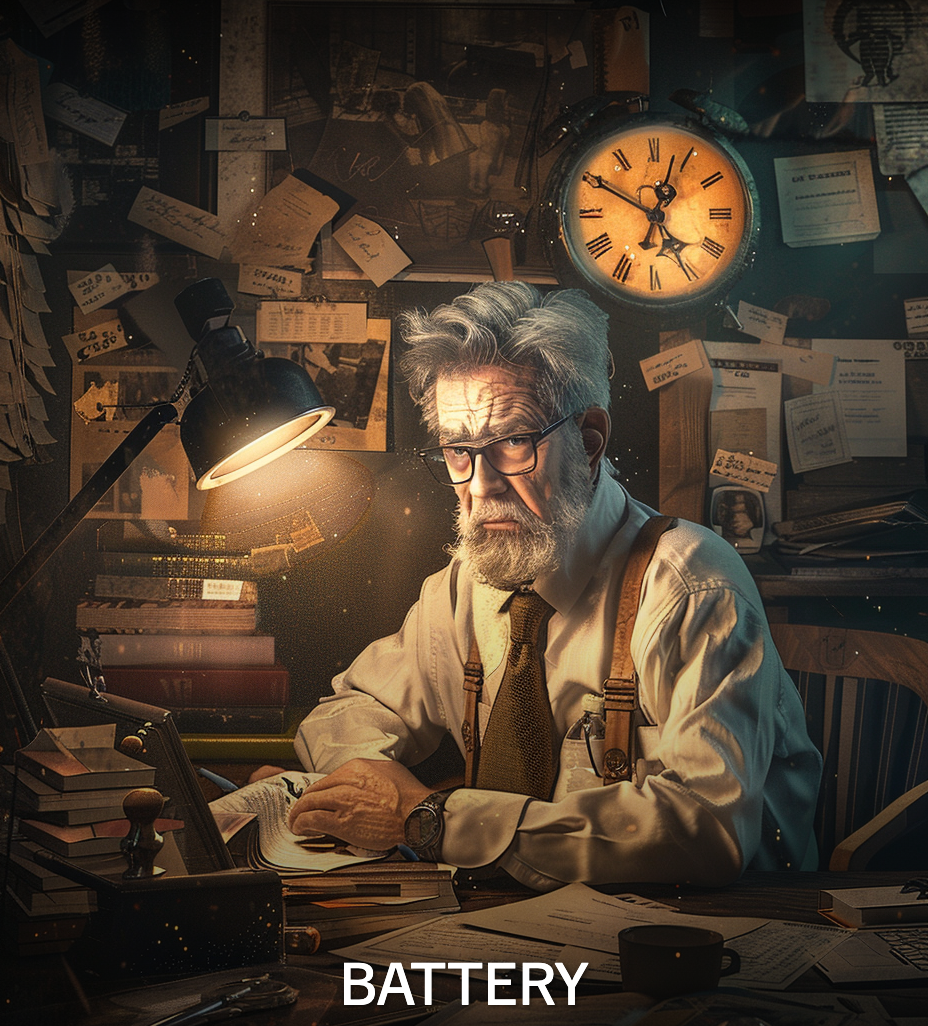
Battery

After his invention - a tonic which makes humans photosynthetic - is stolen by his rival, a scientist embarks on a quest to reclaim his legacy, only to unravel a discovery that forces him to choose between vengeance and redemption.
Submitted by: Studio Sutra
Genre: Drama • Sci-Fi
Shooting Location: International
Ask the Writer
Share it
Screenplay Synopsis:
Dr. Roy, a brilliant but disgraced scientist, drowns in alcohol and bitterness after his former colleague, Dr. Mandal, steals his ground-breaking research and wins a Nobel Prize. Mandal’s discovery—a tonic that allows humans to absorb and store solar energy, converting it into biological, electrical, and mechanical energy—revolutionizes the world. While Mandal basks in global fame, Roy faces financial ruin, professional isolation, and deep resentment toward the system that discarded him. He vents his frustration on his PhD student, Pranav, who desperately seeks an escape from his toxic mentorship and hopes to join Mandal’s prestigious research team. Meanwhile, Prerna, an ambitious journalist and Pranav’s girlfriend, plays both sides to further her career, grappling with the ethical dilemmas of exposing scientific corruption. Roy’s estranged wife, Ms. Roy, a ruthless journalist, once dismissed his accusations of Mandal’s plagiarism. Their fractured relationship fuels his obsession with redemption. Pressured by his corporate sponsor, Mr. Bansal, to produce results or risk losing funding, Roy revisits his past work. In the process, he discovers a critical flaw: his own research suggests that the Sun’s remaining lifespan is far shorter than predicted by classical theories due to an overlooked factor. As Roy wrestles with the implications, he questions whether his pursuit of truth is driven by scientific integrity or personal vengeance. The battle for legacy and justice intensifies, raising moral questions about scientific progress, the commercialization of discovery, and the cost of ambition. Seeking guidance, Roy turns to his old mentor, Dr. Swami, who advises him to prioritize his well-being. Determined to reclaim his life, Roy attempts to reconcile with his wife, proposing they have a child who could act as a human battery using Mandal’s tonic. However, through Pranav and Prerna, Ms. Roy learns of this unsettling plan and abandons him, leaving him shattered. Sensing an opportunity, Prerna persuades Pranav to leak Roy’s secret to Mandal, hoping to secure Pranav a place in his lab—an act that would strip Roy of everything. Suspecting Mandal’s involvement in the betrayal, Roy confronts him at Bansal’s office. Meanwhile, Pranav, torn between ambition and loyalty, has been secretly recording his conversations with Roy, evidence that could be used to report him to the harassment committee. As Pranav hesitates, struggling with his conscience, the question remains: will he send the recordings and punish Roy, or will he let him go? At its core, Battery is a gripping drama of genius, betrayal, and the dark underbelly of scientific competition in a world where ideas are currency and ethics are negotiable.
Be the first to ask a question.

Sharing is caring

Want to see this screenplay get made into a movie? Share the screenplay to friends and get it voted all the way to the big screen

https://www.kinolime.com/screenplays/battery-short

Share:

Director's statement:

Battery is a short film about power—how it is accumulated, stored, abused, and ultimately transferred. Set almost entirely within enclosed domestic and work spaces, the film follows Dr. Roy, a once-respected scientist now suffocating under professional failure, personal resentment, and institutional pressure. As the world celebrates a rival’s Nobel Prize, Roy spirals inward, clinging to a discovery that may restore his relevance—or expose his moral collapse. What interested me was not the science itself, but the psychology behind it. Academia, like many hierarchies, often disguises exploitation as mentorship and ego as excellence. Dr. Roy is not a villain in the conventional sense; he is a product of a system that rewards output over ethics and genius over empathy. His relationship with his student Pranav mirrors his own past under an abusive mentor, creating a cycle where victimhood quietly mutates into domination. The film asks whether intelligence without accountability is any different from corruption. The title Battery works on multiple levels. It refers to stored energy, scientific potential, and the looming fear of depletion—but also to emotional and psychological battery. Every relationship in the film involves extraction: institutions extracting results, mentors extracting loyalty, spouses extracting validation, and ultimately, individuals extracting meaning from others to justify their own existence. Visually, the film is restrained and claustrophobic. Static frames, ticking clocks, dying lamps, and repetitive interiors emphasize stagnation rather than progress. Time becomes an antagonist—constantly present, constantly running out. The outside world exists mostly through screens, emails, and phone calls, reinforcing Dr. Roy’s isolation and his inability to truly connect with reality or people. The ending deliberately resists closure. Pranav’s unsent email to the harassment committee is the moral fulcrum of the film. Justice, here, is not denied—it is deferred. I wanted the audience to sit with that discomfort, to question whether silence is complicity, and whether survival within a broken system always demands a personal compromise. Battery is ultimately a film about inheritance—not of wealth or fame, but of behavior. It asks a quiet but unsettling question: when given power, do we break the cycle, or do we simply learn how to wield it better?

Related Screenplays