Kinolime
  • Competitions
  • Sign in
Kinolime
  • Competitions
    • Submit a Screenplay
    • Competition Rules
    • Competition Hub
    • Production Hub
  • Media
    • Podcast Hub
    • News Hub
  • Learn
    • Screenplay Coverage
    • Screenwriting Guides
    • Courses
    • How it works
    • Explore the Filmmaking Process
  • Community
    • NXT World
    • Kino Lounge
    • Blog
    • Library
  • About
    • Careers
    • About
    • Contact us
    • Press
  • Help Center

Competition

Home pageCompetition HubHow It WorksSubmission Release

Company

About KinolimePressCareersBlogContact us

Site Info

Privacy PolicyTerms of ServiceTerms & ConditionsCode of ConductAccessibility Statement

Resources

How to read a Screenplay?What is Screenplay Coverage?Podcast HubLearnSupport Centerwww.kinolime.in
Kinolime
Follow us on social:
©2026 Kinolime Inc

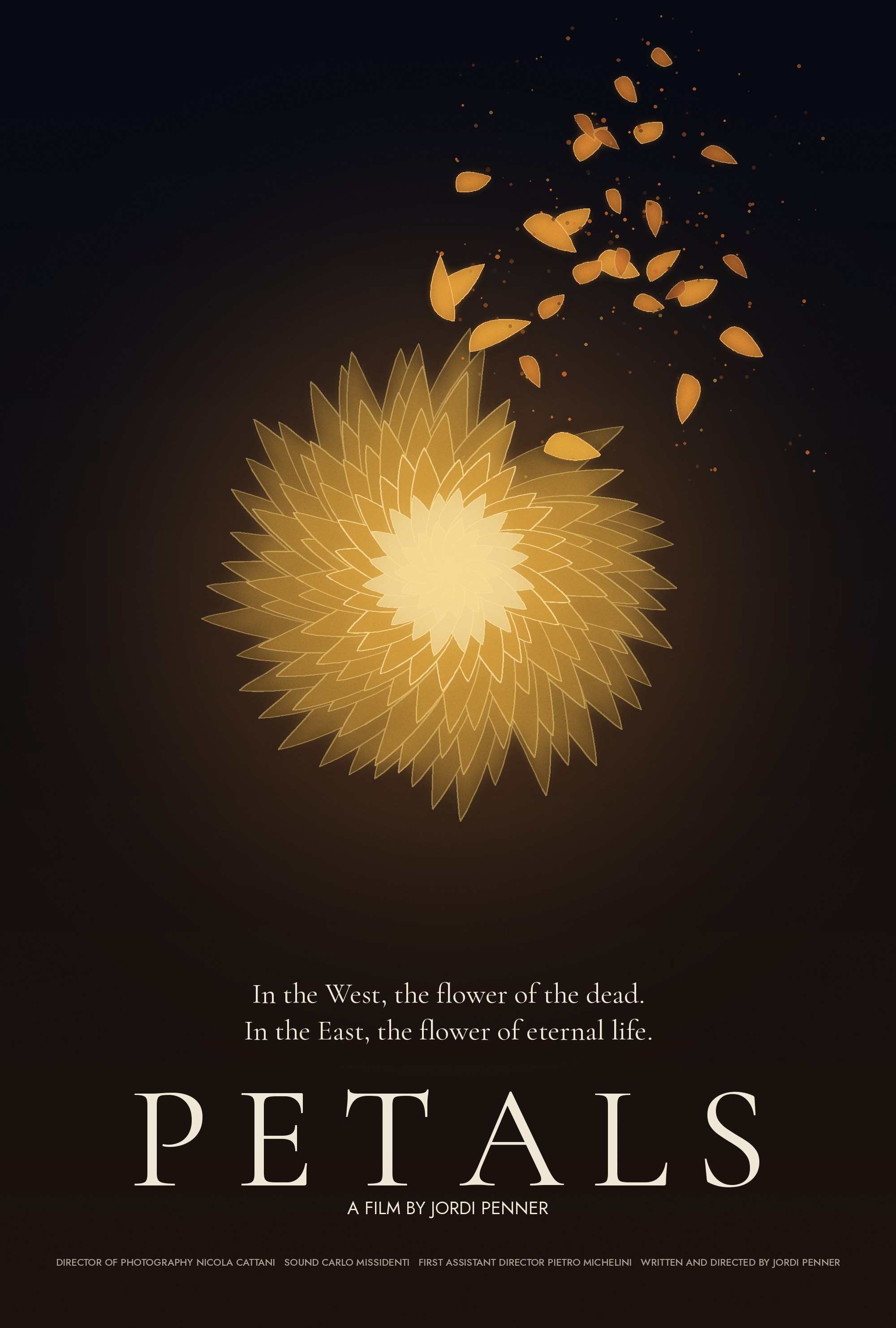
PETALS

A farm girl furious at her mother for putting down a sick cow takes refuge with her grandfather, unaware that he has chosen to end his own pain that same afternoon.
Genre: Drama
Shooting Location: Sundance, WY
Ask the Writer
Share it
Screenplay Synopsis:
Morning on a farm. From behind a grate, Fabia, ten, watches a cow lying on its side in the straw, moaning. Her mamma, who runs the farm alone, comes in with the veterinarian. The verdict is quick: acute peritonitis, nothing to be done except spare the animal further pain. Mamma nods. Fabia, unseen until now, runs. Across the fields, where a group of farmhands is stacking wood for a great pyre, she climbs the hill to her grandfather's house. Ercole is eighty-four, once a painter, now confined to a sofa in a darkened living room full of his own canvases, one of them a Hercules on the pyre. His body is a map of pain. That same morning, with immense effort, he has fetched a knife from the kitchen and hidden it under the cushion. He is going to end it today. Fabia lets herself in with the key under the log. She tells him her mamma wants to kill the cow. He weighs the words and asks, gently, whether her mamma might have her reasons. Then he asks if they have ever done the chrysanthemum. He has her bring the little lap easel and, in a trembling hand, draws the flower for her, petal behind petal, and tells her what it means: in Italy the flower of the dead, in Japan kiku, the golden flower, a symbol of life, longevity, immortality, worn by the imperial house. He hands her the pencil, and lies down with his back to her, wide awake, feeling for the knife. Mamma's pickup arrives before he can act. She takes Fabia home, angry that she came without asking. In the truck she tries to explain that what she is doing for the cow is mercy. Fabia will not hear it. She shuts herself in her room with her Walkman and, all afternoon, draws. By evening the drawing is finished, a meadow of chrysanthemums, and for a moment Fabia forgets to be angry. Mamma, looking for a way back to her daughter, suggests they show it to Grandpa. They drive past the pyre, now built, an effigy of an old woman being hoisted to its top. Mamma switches on the light in Ercole's living room. He is slumped on the sofa in his own blood, still alive. While her mamma phones for an ambulance, Fabia goes to him and takes his hand. He looks at her: he can't even manage this anymore, what is he still here for. Fabia holds up the drawing. He simply smiles. Mamma carries her daughter out. In the truck the ambulance lights pass across Fabia's wet face; in the fields the pyre burns and the community sings, flames rising like petals in the wind. Somewhere a cow is lowing. Years later, in the same barn, a woman with a mole beneath her left eye pulls a calf into the world and watches it stand. Fabia, grown, comes home, where a framed meadow of golden chrysanthemums hangs by the door.
Be the first to ask a question.

Kino Lounge

Only readers can post comments. See our community guidelines.

Sharing is caring

Want to see this screenplay get made into a movie? Share the screenplay to friends and get it voted all the way to the big screen

https://www.kinolime.com/screenplays/petals

Share:

Director's statement:

I was a boy when my grandfather tried to end his life. He was a painter, and for years an illness had kept him in bed, unable to move, unable to work, in a pain that never let up. The attempt failed. When my relatives rushed in to save him he said something that has stayed with me ever since, lucid and almost matter of fact: "I can't even manage this anymore. What am I still here for?" I did not understand it then. I am not sure I fully understand it now. Petals is my attempt to look at that sentence again, from the distance of adulthood, and to give it the shape of a story. Petals is concerned with death as a release from pain, and it approaches the subject through eyes that have not yet learned to judge. Fabia's innocence is the filter through which the audience is invited to feel the contradiction rather than resolve it: what her mother does out of mercy for an animal is what Ercole is trying to do for himself, and the film offers no verdict. I have structured the story so that each viewer is left to reach their own conclusion. The chrysanthemum holds this contradiction in a single image. In Italy it is the flower of the dead, laid on graves in November. In Japan it is kiku, the golden flower, a symbol of long life and even immortality, offered at weddings and worn as the emblem of the imperial house. The same petals, two opposite meanings. That is the moral territory of the film. Ercole's name comes from the myth. Hercules, tormented beyond endurance by a poisoned shirt fused to his skin, asked to be laid on a pyre and burned. That fire returns in the film as a rural rite still alive across Europe, the burning of an effigy that marks the end of winter and the return of spring. Death and renewal share the same flames. Visually, the day gives me its own dramaturgy. Ercole's house is a place of half-closed shutters and hard blades of low light; the farm and the fields are open and airy; the night is lit only by the pyre. Time passes through light, and contrast and saturation shift with it while remaining bound to a single palette. The final image, a calf standing for the first time is where I want the film to leave the viewer: with the sense that death, however hard it is to accept, is never truly the end.

Related Screenplays