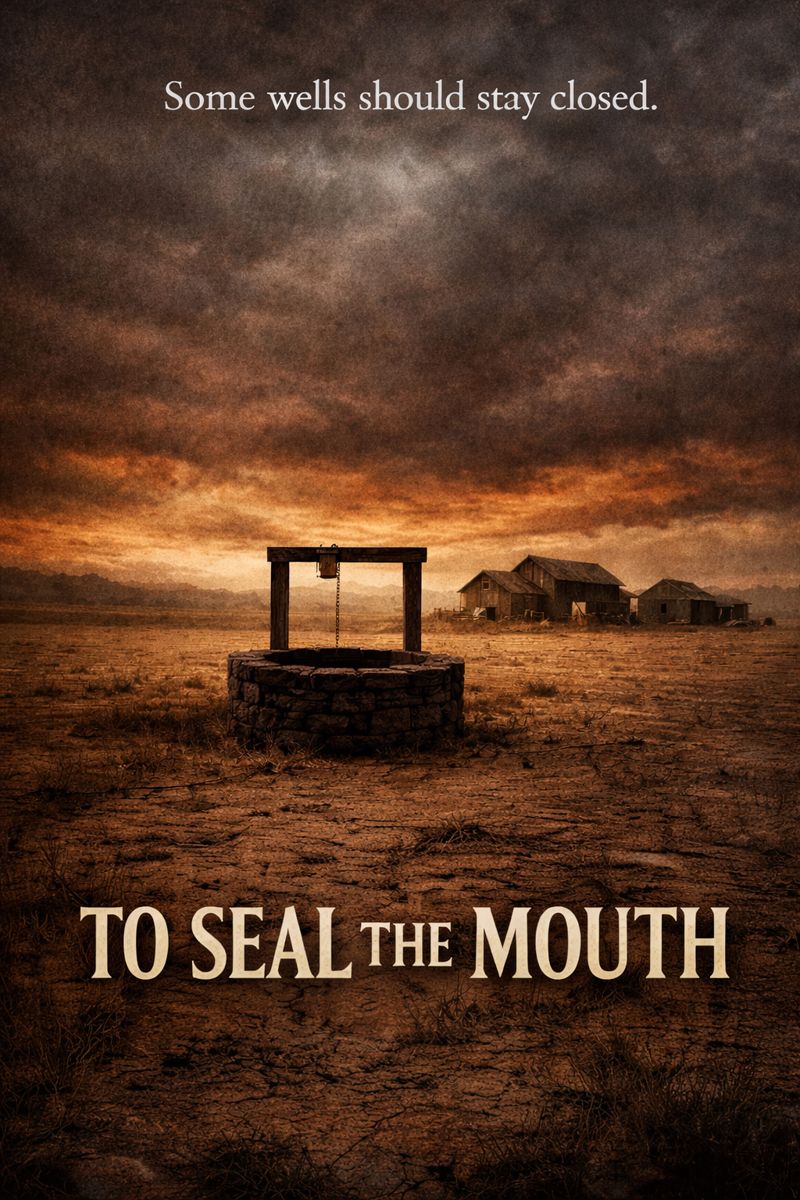
To Seal the Mouth unfolds on the desiccated Texas plains in 1872, where the Granger family teeters on the edge of extinction. Elias Granger, a hard, devoutly self-reliant homesteader, believes land yields only to labor. Wells are dug. Hope dries up. The ground gives nothing back.
When a fatal accident kills Elias’s teenage son during one such dig, grief does not soften him—it sharpens his resolve. With his wife Nora desperate and their youngest child Ruth growing frighteningly perceptive, Elias makes the one choice he swore he never would: he seeks out the local witch to dowse for water.
The witch does not bargain or curse. She listens—to the land, and to Ruth. The dowsing reveals a place where water lies close, but it also exposes something Elias buried long before the drought: blood spilled to claim the land, bodies hidden beneath paperwork and denial. Digging there opens more than a well. It opens a mouth.
Water finally flows, restoring crops, animals, and momentary joy—but the well becomes a conduit for a creature formed from memory and grief, rising at night to reclaim what was taken. The entity wears the dead like skin, stalks the homestead, and pulls Nora into the depths.
Ruth, innocent yet deeply attuned, instinctively draws sigils of protection, becoming the only one the land will listen to. As the horror escalates, Elias is forced to accept that this is not a monster to kill but a wound to seal. In a brutal descent into the well, he confronts the creature directly, using Ruth’s mark and his own blood to bind it—and drags Nora back from the dark.
The well collapses. The land grows quiet.
But peace is incomplete. Nora returns changed, hollowed by what she left behind. Ruth’s connection to the earth remains unresolved. The family survives, but the final image makes one truth clear: the land remembers, and survival often means living with what can never be fully buried.